
New terms often appear online before they settle into a single, agreed-upon definition. MataRecycler is one of those terms. You may have seen it mentioned in different contexts—sometimes technical, sometimes conceptual, sometimes linked to reuse or efficiency. This article breaks down what MataRecycler actually refers to, why it’s being discussed, and how to understand it without confusion.
What Is MataRecycler?
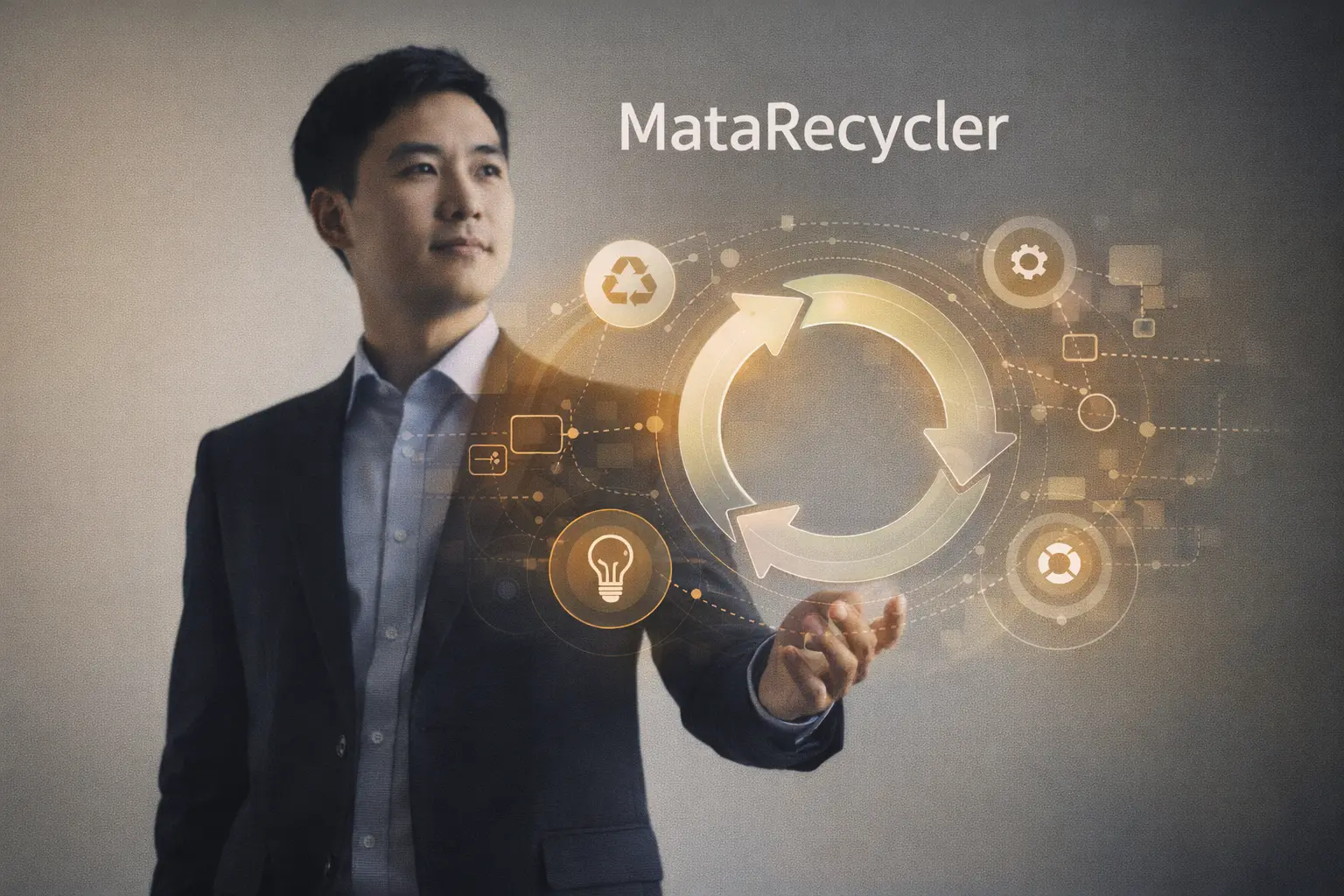
At its core, MataRecycler refers to an emerging concept centered on reuse, iteration, and transformation. Rather than pointing to one fixed product or platform, it describes an approach where outputs are cycled back as inputs, creating a loop that reduces waste and improves efficiency.
In simple terms, MataRecycler is about:
- Reusing resources instead of discarding them
- Refining results through repeated cycles
- Designing systems that improve over time
Because the term is still evolving, its meaning depends heavily on context.
Why MataRecycler Is Considered an Emerging Concept
MataRecycler is labeled “emerging” for a few key reasons:
- It appears across multiple industries without a unified definition
- Usage has increased faster than formal documentation
- Different fields interpret it differently
- It reflects broader trends toward circular systems and efficiency
This pattern is common when new ideas gain traction before standards catch up.
How MataRecycler Works (Conceptual Explanation)
While implementations vary, the underlying logic follows a similar structure:
- Input Collection
Raw materials, data, or components enter the system. - Processing or Transformation
The input is filtered, refined, or restructured. - Reuse Cycle
The output is fed back into the system instead of being discarded. - Iteration and Optimization
Each cycle improves performance, quality, or efficiency.
This looping approach is what differentiates MataRecycler from linear, one-time processes.
Where the Term MataRecycler Is Commonly Used
Because the term is flexible, it shows up in several domains:
Digital and Technical Contexts
- Iterative data handling systems
- Conceptual discussions around lifecycle management
- Frameworks that reuse processed outputs
Sustainability and Resource Discussions
- Circular economy thinking
- Waste reduction models
- Reuse-focused planning strategies
Abstract or Educational Usage
- Teaching frameworks
- Strategic planning concepts
- Exploratory or experimental terminology
Understanding which context applies is essential to interpreting the term correctly.
Why MataRecycler Is Gaining Attention
Several forces are driving interest:
- Growing focus on efficiency and optimization
- Increased awareness of resource reuse
- Online discussions that spark curiosity
- Ambiguity that encourages people to search for clarity
The combination of relevance and uncertainty makes MataRecycler a frequent search topic.
Is MataRecycler a Tool, Platform, or Idea?
This is one of the most common questions, and the answer depends on how the term is being used.
| Possibility | Does It Apply? |
|---|---|
| Commercial product | Not universally |
| Defined software platform | Sometimes, context-specific |
| Conceptual framework | Most commonly |
In most cases, MataRecycler should be understood as a concept or model, not a standalone product.
Potential Use Cases of MataRecycler
Because it’s concept-driven, MataRecycler can apply to many scenarios:
- Designing systems that reduce waste
- Creating iterative workflows
- Teaching reuse-focused thinking
- Planning sustainable processes
- Experimenting with circular models
These use cases often overlap rather than exist in isolation.
Benefits and Limitations
Benefits
- Encourages efficient reuse
- Flexible across industries
- Supports long-term optimization
- Aligns with sustainability trends
Limitations
- No standardized definition
- Can be misunderstood
- Requires clear context to avoid confusion
Recognizing both sides helps set realistic expectations.
Common Misunderstandings
People often misinterpret MataRecycler by:
- Assuming it refers to a single product
- Treating all mentions as identical
- Ignoring the surrounding context
- Overstating its technical specificity
Clarity comes from focusing on how the term is being used, not just the word itself.
Best Practices for Using or Explaining MataRecycler
If you encounter or use the term:
- Define the context early
- Clarify whether it’s conceptual or applied
- Avoid presenting it as a universal standard
- Use examples to ground abstract ideas
These steps reduce confusion and improve understanding.
Alternatives and Related Concepts
MataRecycler overlaps with several established ideas, including:
- Circular systems
- Iterative processing
- Lifecycle management
- Resource optimization models
These related concepts often provide clearer definitions and can help frame discussions.
Conclusion
MataRecycler is best understood as a flexible, emerging concept rather than a fixed product or platform. It reflects a broader shift toward reuse, iteration, and efficiency across multiple fields. By focusing on context and avoiding assumptions, you can make sense of how the term is being used today—and how it may evolve in the future.
Frequently Asked Questions
What does MataRecycler mean in simple terms?
It refers to an idea focused on reusing outputs through repeated cycles to improve efficiency.
Is MataRecycler a real product?
Not usually. It’s more commonly a concept or framework unless clearly defined otherwise.
Why is MataRecycler hard to define?
Because it’s used across different fields without a single standard meaning.
Is MataRecycler related to sustainability?
In many contexts, yes, especially where reuse and efficiency are priorities.
Can MataRecycler apply to digital systems?
Yes, particularly in discussions around iterative processing or reuse of data.
Is MataRecycler still evolving?
Yes. Its meaning is likely to become clearer as usage matures.
How should I interpret MataRecycler when I see it online?
Look at the surrounding context to understand how the term is being applied.
