

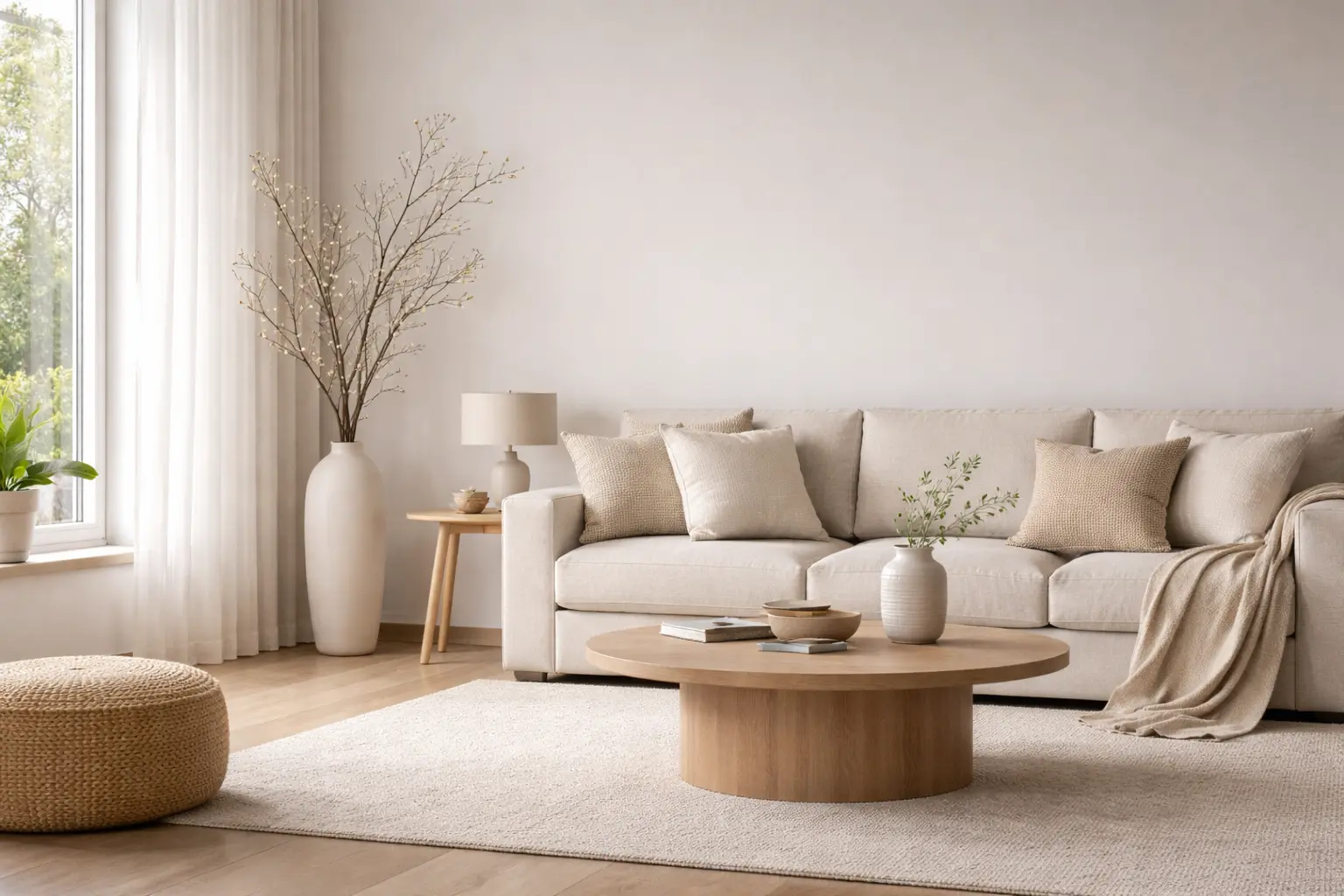
Minimalist living rooms often look clean but feel empty.
That’s where pyntekvister comes in.
A few carefully arranged decorative twigs or branches can add warmth, height, and organic texture without cluttering your space. Done right, they create that calm Scandinavian design look you see in modern homes and showrooms.
If you’ve ever wondered how to decorate with branches without overdoing it, this guide walks you through exactly what to use, where to place them, and how to keep things simple.
What Are Pyntekvister?
Pyntekvister are decorative natural branches or twigs styled indoors to add subtle, nature-inspired texture to a room.
The concept comes from Nordic homes, where minimalism and biophilic design—bringing nature indoors—play a central role in interior styling.
Instead of filling shelves with objects, you add one thoughtful, organic element.
The result feels peaceful, not busy.
Why Pyntekvister Work So Well in Minimalist Living Rooms
Minimalism depends on negative space and intentional décor.
Flat surfaces and neutral walls can feel cold. Branches introduce:
- Natural movement
- Soft shadows
- Vertical height
- Earthy texture
- Seasonal personality
Interior stylists often use this trick in spaces inspired by IKEA, Muji, or H&M Home—brands known for clean, functional aesthetics.
One arrangement can make a room feel “finished” without adding clutter.
Types of Branches to Use
Choosing the right material is half the styling.
Popular Options
| Branch Type | Best For | Effect |
|---|---|---|
| Birch | Scandinavian look | Light, airy |
| Willow | Soft curves | Elegant movement |
| Eucalyptus | Green freshness | Calm, spa-like |
| Cherry blossom | Spring | Soft color pop |
| Dried twigs | Year-round | Rustic minimal |
Natural vs Artificial
| Feature | Natural | Artificial |
|---|---|---|
| Look | Authentic texture | Consistent shape |
| Cost | Often free/cheap | Medium |
| Maintenance | Replace occasionally | Long-lasting |
| Sustainability | Eco-friendly | Depends on material |
Natural almost always looks better. Artificial works if quality is high and finish is matte.
Step-by-Step: How to Style Pyntekvister
Here’s a simple framework you can follow every time.
Step 1: Pick the right vase
Use neutral ceramic, stone, or matte glass. Avoid shiny finishes.
Step 2: Choose fewer stems
Use 3–7 branches. More looks messy.
Step 3: Trim uneven heights
Different lengths create flow and movement.
Step 4: Leave negative space
Don’t fill every corner. Let the branches “breathe.”
Step 5: Position near light
Natural light enhances shadows and texture.
That’s it. Minimal effort, maximum impact.
Placement Guide for Living Rooms
Where you place the arrangement matters more than how many you use.
Best Locations
| Placement | Why It Works |
|---|---|
| Floor vase in corner | Adds height to empty areas |
| Coffee table | Subtle focal point |
| Console/entryway | Welcoming touch |
| Shelf styling | Breaks straight lines |
| Window area | Highlights natural light |
Rule to Remember
One strong arrangement per zone.
Multiple arrangements = visual clutter.
Styling for Small Spaces or Apartments
If your living room is compact, go lighter.
Try:
- Thin branches only
- Short vases
- Single-stem styling
- Narrow shelves or windowsills
Small spaces benefit most from vertical décor because it doesn’t take floor area.
Seasonal Styling Ideas
Rotating branches by season keeps your décor fresh without buying new furniture.
Spring
Cherry blossoms, light greens
Summer
Eucalyptus, leafy stems
Autumn
Dry branches, warm tones
Winter
Bare sculptural twigs
This seasonal rotation is budget-friendly and sustainable.
Tools & Essentials Checklist
You don’t need much.
- Ceramic or stone vase
- Garden shears
- Twine or wire (optional)
- Tray for styling
- Steamer or water spray
Simple tools make arranging easier and cleaner.
Budget & Buying Guide
One of the biggest advantages? It’s inexpensive.
Cost Breakdown
- Collected outdoors → Free
- Florist → $5–$20
- Craft store → $10–$30
- Artificial premium stems → $30–$60+
If you prefer shopping online, many minimalist décor stores offer worldwide shipping.
Search phrases like:
- decorative branches online
- minimalist vases for sale
- home décor stores near me
But honestly, local parks or gardens often provide the best options.
Pros and Cons
Pros
- Very affordable
- Sustainable
- Easy to change
- Works in any season
- Adds warmth without clutter
Cons
- Natural stems dry out
- Requires occasional replacement
- Overstyling ruins minimalism
Common Mistakes to Avoid
These mistakes instantly break the look:
- Too many stems
- Bright or glossy vases
- Fake plastic shine
- Blocking walkways
- Using multiple arrangements in one small space
Minimal décor is about restraint.
If unsure, remove one branch.
Alternatives If Branches Aren’t Your Style
Still want organic texture?
Try:
- Pampas grass
- Simple indoor plants
- Stone or clay sculptures
- Linen textiles
But for pure minimalist aesthetics, pyntekvister remain the cleanest option.
Conclusion
If you want a warmer, more inviting minimalist living room, start small.
Choose one neutral vase, add a few thoughtfully trimmed branches, and let negative space do the rest.
Pyntekvister prove that sometimes the simplest décor makes the strongest impact.
FAQs
What are pyntekvister exactly?
Decorative branches or twigs used indoors to create natural, minimalist home décor.
How many branches should I use in a vase?
Usually 3–7 stems for a balanced, uncluttered look.
Can I collect branches outside?
Yes, if clean and allowed locally. Dry and trim before use.
Are decorative twigs trendy or timeless?
They’re timeless in Scandinavian interiors and minimalist design.
What vase works best?
Neutral ceramic, stone, or matte glass shapes.
How long do natural branches last?
Typically 2–4 weeks indoors depending on humidity.
Do artificial branches look bad?
Cheap ones do. High-quality matte finishes can work.
Are they good for small apartments?
Yes. They add height without using floor space.
