
Digital work today is messy. Teams use dozens of apps, dashboards, spreadsheets, and cloud tools. Data lives in different places. Tasks repeat manually. Simple processes become slow and confusing.
If you’ve ever thought, “There must be a smarter way to connect everything,” you’re already thinking in the direction of GLDYQL.
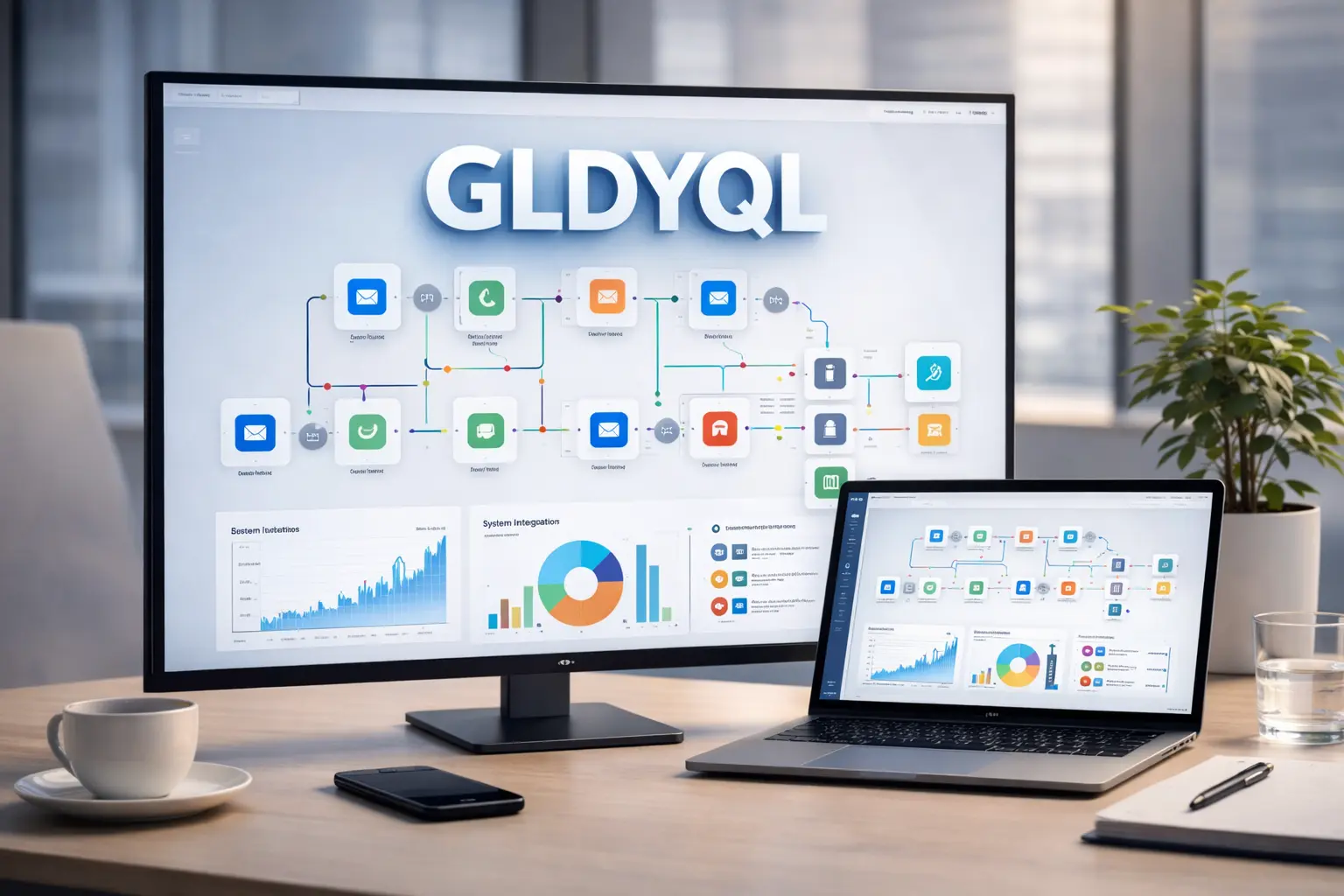
GLDYQL is an emerging digital workflow framework designed to structure processes, automate tasks, and integrate systems so operations run faster and more reliably. Instead of stacking tools randomly, it creates logic, order, and flow across your digital environment.
This guide explains exactly what it is, how it works, and whether it’s right for your team.
What Is GLDYQL?
GLDYQL is a structured digital framework for workflow automation, system integration, and process orchestration that helps teams simplify complex digital operations.
It is not a single software or app.
Think of it as:
- a workflow design method
- a process automation framework
- a digital operations model
- sometimes described as a platform-style system architecture
It focuses on connecting tools, defining logic rules, and automating repetitive tasks using APIs, dashboards, and automation engines.
Framework or Software?
This is the most common question.
Quick answer:
GLDYQL is primarily a framework or approach, not standalone software.
You implement it using:
- automation tools
- cloud platforms
- integrations
- low-code systems
- workflow engines
It’s the structure and strategy that matters — not one specific tool.
Why GLDYQL Matters Today
Modern teams struggle with:
- Tool overload
- Manual processes
- Data silos
- Slow decision-making
- Poor visibility
When systems don’t talk to each other, productivity drops.
GLDYQL addresses these issues by creating:
✔ automation-first processes
✔ clear logic flows
✔ interoperable systems
✔ centralized dashboards
✔ scalable architecture
The result is faster operations and fewer mistakes.
How GLDYQL Works (Step-by-Step)
Here’s a simplified breakdown anyone can follow.
Step 1 — Map Your Workflow
Document how tasks move from start to finish.
Step 2 — Identify Repetition
Highlight manual steps that repeat daily or weekly.
Step 3 — Define Logic Rules
Create triggers and conditions (if/then logic).
Step 4 — Connect Systems
Use APIs or integrations to link tools together.
Step 5 — Automate Tasks
Let automation tools handle repetitive work.
Step 6 — Monitor & Optimize
Track performance with analytics dashboards.
Over time, processes become faster and smoother.
Core Principles Behind GLDYQL
| Principle | What It Means |
|---|---|
| Structured logic | Clear decision paths |
| Automation-first | Reduce manual work |
| Integration | Tools communicate |
| Transparency | Full visibility |
| Scalability | Easy growth |
These principles help teams avoid chaos as they expand.
Key Features You’ll Typically Use
GLDYQL implementations often rely on:
- Workflow automation tools
- API integrations
- Cloud computing platforms
- Analytics dashboards
- Rule-based logic engines
- Low-code platforms
- Process orchestration systems
Examples include common SaaS automation tools, data pipelines, and business intelligence software.
Real-World Use Cases
Operations Teams
Automate approvals, reporting, and task assignments.
Marketing
Route leads automatically and sync campaigns across tools.
E-commerce
Process orders, update inventory, and send notifications.
IT & DevOps
Automate deployments and incident tracking.
Startups
Operate lean with fewer manual tasks and smaller teams.
If a task repeats, GLDYQL principles apply.
Who Should Use GLDYQL?
Great fit for:
✔ growing businesses
✔ remote teams
✔ SaaS-heavy environments
✔ startups
✔ data-driven companies
Less necessary for:
✖ very small teams
✖ simple manual processes
✖ single-tool setups
Complexity determines the need.
Decision Framework: Should You Adopt It?
Answer these:
- Too many tools?
- Too many manual tasks?
- Slow workflows?
- Integration headaches?
- Growth causing chaos?
If most answers are yes, GLDYQL can help significantly.
Benefits of GLDYQL
Efficiency
Tasks complete faster.
Accuracy
Fewer manual errors.
Visibility
Dashboards show what’s happening.
Scalability
Easy to add new tools or processes.
Productivity
Teams focus on strategy instead of repetitive work.
Pros and Cons
Pros
✔ saves time
✔ reduces complexity
✔ improves integration
✔ scalable
✔ flexible
Cons
✖ setup time required
✖ learning curve
✖ risk of overengineering
✖ too many tools can backfire
Start simple to avoid these issues.
Common Mistakes to Avoid
❌ Automating broken processes
❌ Adding unnecessary tools
❌ Ignoring team training
❌ Overcomplicated logic
❌ No monitoring
Fix workflows first, then automate.
Example Scenario
Imagine a marketing team:
Before:
- manual lead export
- spreadsheet updates
- email copying
- delayed reporting
After applying GLDYQL principles:
- leads auto-sync
- dashboards update live
- emails trigger automatically
- reports generated instantly
Hours of work saved weekly.
Implementation Guide
Beginner rollout plan
- Audit existing processes
- List repetitive tasks
- Choose 1–2 automation tools
- Build simple logic rules
- Integrate systems gradually
- Test and measure
- Expand slowly
Small wins build momentum.
Tools That Fit Well with GLDYQL Concepts
| Tool Type | Purpose |
|---|---|
| Automation platforms | Trigger actions |
| APIs | Connect apps |
| Analytics tools | Track performance |
| Low-code builders | Create workflows |
| Cloud systems | Host services |
You don’t need expensive enterprise software to start.
Alternatives
If GLDYQL feels too advanced, try:
- manual workflows
- single all-in-one software
- basic automation scripts
- traditional BPM systems
But these may limit scalability.
Best Practices Checklist
✔ start small
✔ document everything
✔ automate only what repeats
✔ avoid tool overload
✔ measure results
✔ train your team
Consistency beats complexity.
Conclusion
GLDYQL isn’t about buying another tool. It’s about designing smarter workflows.
By structuring logic, automating repetitive tasks, and connecting systems properly, teams gain clarity, speed, and scalability. Whether you’re a startup or an established business, applying these principles can transform how work gets done.
Start simple, automate wisely, and build a system that grows with you.
Frequently Asked Questions
1. What does GLDYQL mean?
It refers to a digital workflow framework that structures automation and integrations.
2. Is GLDYQL a tool?
No. It’s an approach that uses different tools together.
3. Is it only for tech companies?
No. Any business with repetitive processes can benefit.
4. Is automation expensive?
It depends on tools, but many low-cost or free options exist.
5. Do small teams need it?
If processes are simple, maybe not. Growing teams benefit most.
6. Does it require coding?
Often low-code or no-code tools are enough.
7. How long before results show?
Small improvements can appear within weeks.
8. What’s the biggest benefit?
Time savings and reduced manual work.
